
Mini Split Installation in Waterbury, CT
A new system here will heat from October through May and cool from June through August every year. Tell us about the house, and a licensed contractor who covers Waterbury will get in touch.
Tell us about the job
It takes about a minute.
Waterbury asks a mini-split to run almost all year
Winter nights here average 22°F from December through February, and homes need heat from October through May, eight months straight. Add the three summer months of cooling and a mini-split is working 11 months out of the year. It has to handle real cold, not just take the edge off a mild fall evening.
A lot of houses in this area still heat with fuel oil, and a mini-split installed to replace or back up that heat needs to keep up on the coldest nights, not just the average ones. Any new unit installed today has to meet the federal minimum of 14.3 SEER2 for cooling and 7.5 HSPF2 for heating. That's the floor. Given how many months this system will run here, it's worth asking what the unit you're getting delivers above it.
- 8 months
- October through May, your system heats
- 3 months
- June through August, it cools
- 22°F
- the average winter night it heats against
- 82°F
- the average summer afternoon it cools against
NOAA 1991–2020 monthly normals
Connecticut requires HVAC contractors to hold a state license.
The license is issued to the contractor, not to the job, so it comes from work the state already checked before this installation was ever scheduled. Connecticut's Department of Consumer Protection is the agency that tested that contractor and keeps the record.
For a mini-split, the other check comes from the local building office. Most cities and counties require a permit for this kind of installation and an inspection once the work is done, and that inspection is what catches a bad line set connection or wiring mistake after the fact. That permit and inspection are separate from the state license, and they cover the installation itself rather than the contractor.
Sources: Connecticut General Assembly · Connecticut Department of Consumer Protection
- Is a mini split worth it?
- For most homes here, yes, especially if you're heating with fuel oil now. A mini split runs on electricity and moves heat instead of burning fuel to make it, so it costs less to run than oil heat even on the coldest nights. With winter lows averaging 22°F here, you want a cold-climate model rated for that range, not a standard unit. A contractor can look at your home and tell you whether one or two units make sense for what you're trying to cover.
- How many rooms can a mini split cover?
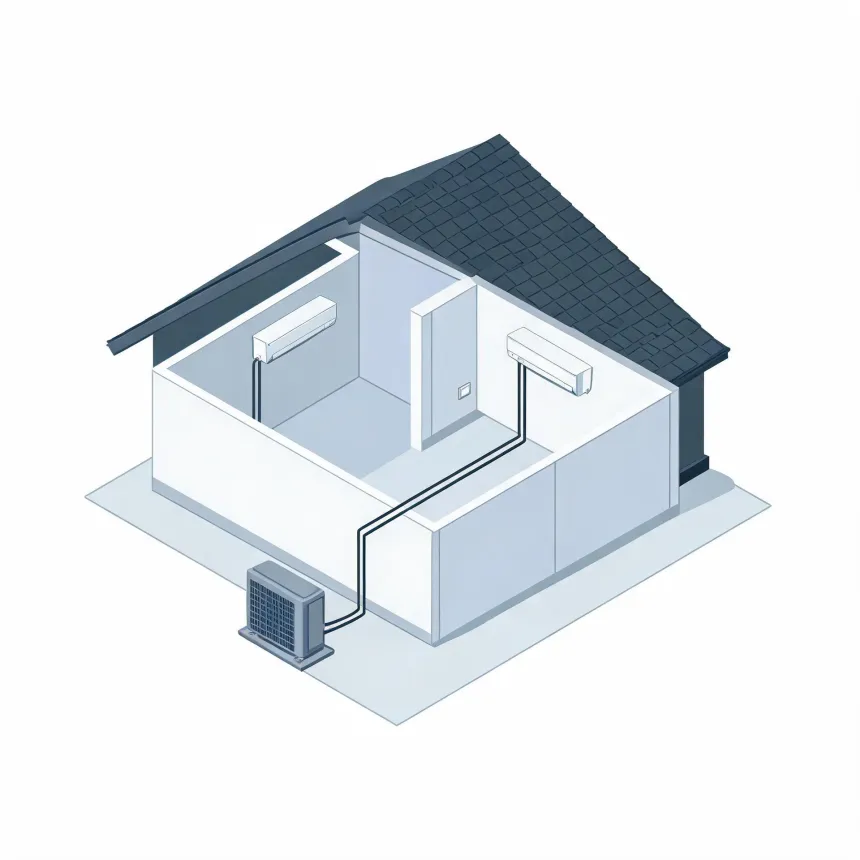
- A single indoor head is built to heat and cool the one room or open area it's mounted in. Multi-zone systems connect one outdoor unit to two, three, or more indoor heads, each one running its own room independently. How many zones your home needs depends on the layout, how the rooms connect, and where heat is being lost, so a contractor will need to walk the house before sizing it.
- Can a mini split heat a whole house?
- It can, if enough zones are installed to reach every room and the units are sized for the cold. Homes here need heat from October through May, with winter nights averaging 22°F, so the outdoor unit has to be a cold-climate model rated to keep producing heat at those temperatures. A house heated entirely by mini splits usually has one indoor head per room or per open living area, not just one unit for the whole place. A contractor can calculate the heat loss for your house and tell you how many zones it takes to cover it.