
Mini Split Installation in New Haven, CT
A new system here will heat from October through May and cool from June through August every year. Tell us about the house, and a licensed contractor who covers New Haven will get in touch.
Tell us about the job
It takes about a minute.

New Haven asks for eleven months of run time a year
A mini-split installed here works most of the year, not just one season. Heat is needed October through May, then cooling picks up in June and runs through August. That leaves one real month off. Winter nights averaging 25°F mean the heat pump has to keep pulling warmth out of cold air night after night, and summer afternoons near 81°F keep the cooling side working too.
Any mini-split sold new has to clear a federal floor either way, 14.3 SEER2 for cooling and 7.5 HSPF2 for heating. Connecticut also sees its share of power loss, with 20% of households going at least 24 hours without it in 2024, so it is worth asking an installer how the unit you choose comes back on once power returns.
- 8 months
- October through May, your system heats
- 3 months
- June through August, it cools
- 25°F
- the average winter night it heats against
- 81°F
- the average summer afternoon it cools against
NOAA 1991–2020 monthly normals
Connecticut requires HVAC contractors to hold a state license.
The license comes from the state's Department of Consumer Protection. It belongs to the contractor, not to the job, which means the contractor was tested and is on record with the state before they ever set foot in your home. It does not mean the state signs off on this particular mini-split once it is in.
That sign-off, where it happens, comes from the local building office. In most cities and counties, installing a mini-split needs a permit and an inspection once the work is done, and that inspection is what confirms this specific install was done right, apart from whatever the contractor's license already tells you about them.
Sources: Connecticut General Assembly · Connecticut Department of Consumer Protection
- Is a mini split worth it?
- For most homes here, yes, especially in a room that never quite gets warm enough in winter or stays hot in summer. A mini split puts heat right where a duct run cannot reach, and it cools that same room when temperatures climb. Winters here drop to 25°F on average overnight, so the outdoor unit needs to be rated for cold climate performance, not just a mild-climate model. A contractor can tell you whether one room, or a few, makes sense for your house.
- How many rooms can a mini split cover?
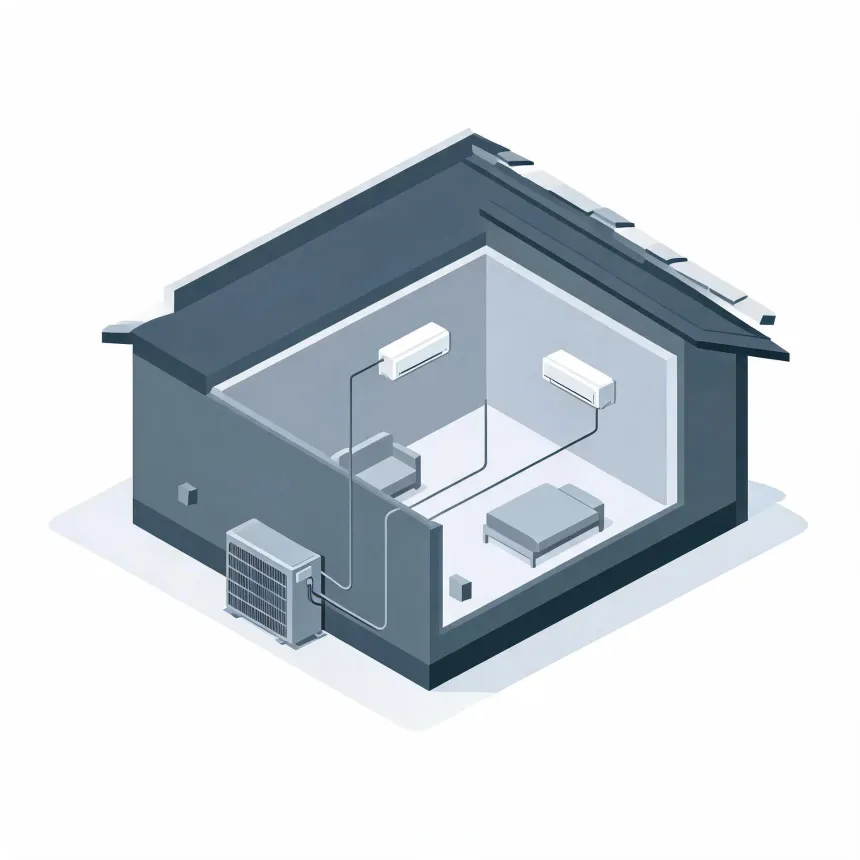
- A single outdoor unit can run one indoor head or several, depending on the system. Multi-zone units support more than one indoor head, each one controlling its own room off the same outdoor compressor. A contractor sizes the whole setup around how many rooms you want covered and how big each one is.
- Can a mini split heat a whole house?
- It can, if enough indoor heads are placed to reach every room, but that takes planning, not just adding units. Homes here need heat from October through May, eight months a year, with nights averaging 25°F in the coldest stretch, so the system has to be sized for real cold. A contractor will look at your layout, room by room, to say whether a whole-house mini split setup makes sense or whether it works better paired with existing heat.