
HVAC Installation in Middletown, CT
A new system here will heat from October through May and cool from June through August every year. Tell us about the house, and a licensed contractor who covers Middletown will get in touch.
Tell us about the job
It takes about a minute.
Middletown asks a lot from a heating and cooling system
Winter nights here average 23°F from December through February, and heat runs from October through May, eight months of the year. That's most of the year. A new furnace or heat pump has to hold up through a long, cold stretch, not just a few sharp cold snaps.
Summer only asks for three months of cooling, with afternoons averaging 82°F, but the system still has to do both jobs well. Just over half the homes here heat with fuel oil, so if that's your setup, an installation is a chance to weigh other options against it. And with 20 percent of Connecticut households losing power for at least 24 hours in 2024, it's worth asking any contractor how the system you choose handles an outage, and what comes back on by itself when the power does.
- 8 months
- October through May, your system heats
- 3 months
- June through August, it cools
- 23°F
- the average winter night it heats against
- 82°F
- the average summer afternoon it cools against
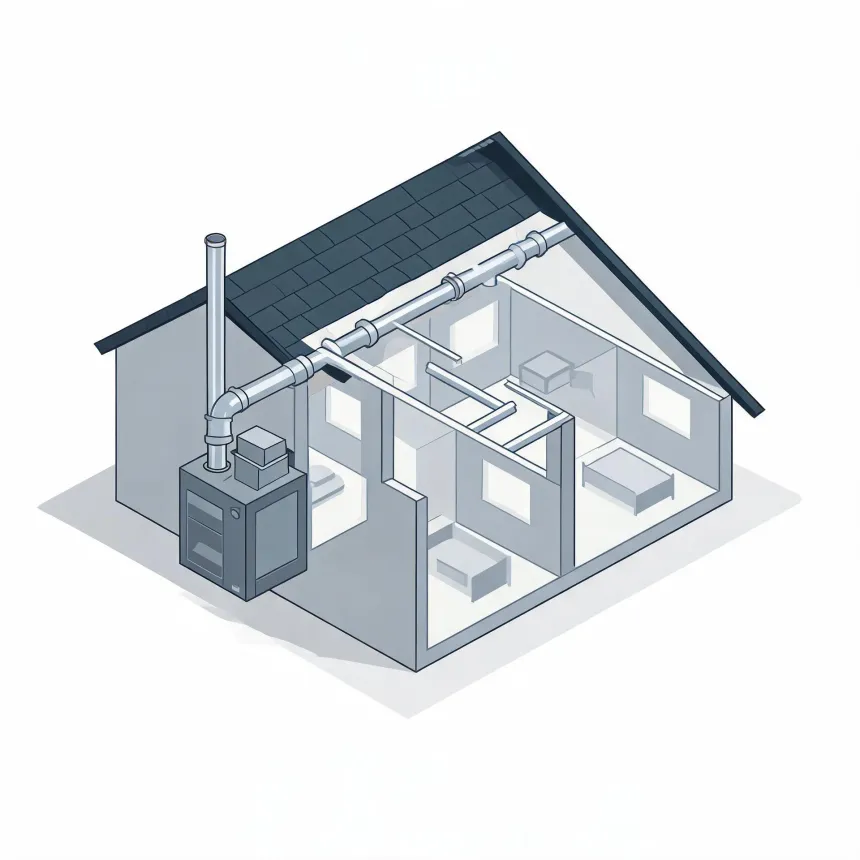
NOAA 1991–2020 monthly normals
Connecticut requires HVAC contractors to hold a state license.
The license comes from the Department of Consumer Protection, and it belongs to the contractor, not to any single job. The state tested that contractor and keeps a record of them before they ever touch your equipment.
For an installation like this one, the license is what stands behind the person doing the work, but the job itself still gets checked separately. In most cities and counties, putting in a new furnace, air conditioner or heat pump needs a permit from the local building office, and the work gets inspected once it's done.
Sources: Connecticut General Assembly · Connecticut Department of Consumer Protection
- When should I replace my HVAC system?
- Replace it when repairs start coming often, or when a technician tells you the repair cost is close to what a new system would run. An older furnace or air conditioner works harder to do the same job, and parts get harder to find as it ages. With 8 months of heating and 3 months of cooling here, most of the year rests on this equipment, so a failing system gets noticed fast. A contractor who inspects your unit can tell you whether it is worth repairing again or time to replace it.
- Should I replace my furnace and air conditioner at the same time?
- If both are old, yes. A furnace and air conditioner installed together are matched to work as one system, and pairing a new unit with an old one can mean the new one never runs at its best. It also means avoiding a second installation a few years later once the older unit finally gives out. If only one is failing and the other still has years left, a contractor can tell you whether they will still work well together or whether replacing both now makes more sense.
- What happens during an HVAC installation?
- A contractor removes the old equipment, sets the new furnace, air conditioner, or both, and connects them to your ductwork, gas line or electrical, and the vent or drain lines they need. They will check the ducts for leaks or damage, since even new equipment loses efficiency pushing air through bad ductwork. Once it is running, they test it, check airflow, and make sure the thermostat controls it the way it should. In Connecticut, this work has to be done by a licensed HVAC contractor, since the state requires it through the Department of Consumer Protection. A contractor can walk you through the specific steps for your house and price the job.