Mini Split Installation in Danielson, CT
A new system here will heat from October through May and cool from July through August every year. Tell us about the house, and a licensed contractor who covers Danielson will get in touch.
Tell us about the job
It takes about a minute.

Danielson asks a lot of a mini-split
Heat from October through May, cooling in July and August. That is 10 months a year this system is working. Winter nights average 20°F, cold enough that a heat pump has to work hard to pull warmth out of that air.
Most homes in Danielson still heat with fuel oil, so a new mini-split is often taking on heating duty a house wasn't built around. Any unit installed new has to meet the federal minimum of 14.3 SEER2 for cooling and 7.5 HSPF2 for heating, and at 20°F, how well it holds up to that minimum is what decides how the house feels in January.
- 8 months
- October through May, your system heats
- 2 months
- July through August, it cools
- 20°F
- the average winter night it heats against
- 79°F
- the average summer afternoon it cools against
NOAA 1991–2020 monthly normals
Connecticut requires HVAC contractors to hold a state license.
Connecticut's Department of Consumer Protection is the one testing and keeping records on the contractor, not on the install itself. The license sits with the business, so it covers them wherever they work rather than getting issued fresh for your mini-split.
The license tells you the contractor was tested and is on record with the state. In most cities and counties, an installation like this also needs a permit from the local building office, along with an inspection once the work is done. That inspection is what checks the mini-split was put in correctly, separate from anything the state license covers.
Sources: Connecticut General Assembly · Connecticut Department of Consumer Protection
- Is a mini split worth it?
- For most homes here, yes, especially if you're heating with fuel oil now. A majority of homes in the area use fuel oil for heat, and a mini split can take over the bulk of that work with a heat pump that cools too. Winters here mean 20°F nights are normal from December through February, so it helps to size the system with a contractor who accounts for that rather than picking a unit off a shelf. Summers are mild by comparison, with afternoons averaging 79°F, so cooling load is rarely the hard part of the decision.
- How many rooms can a mini split cover?
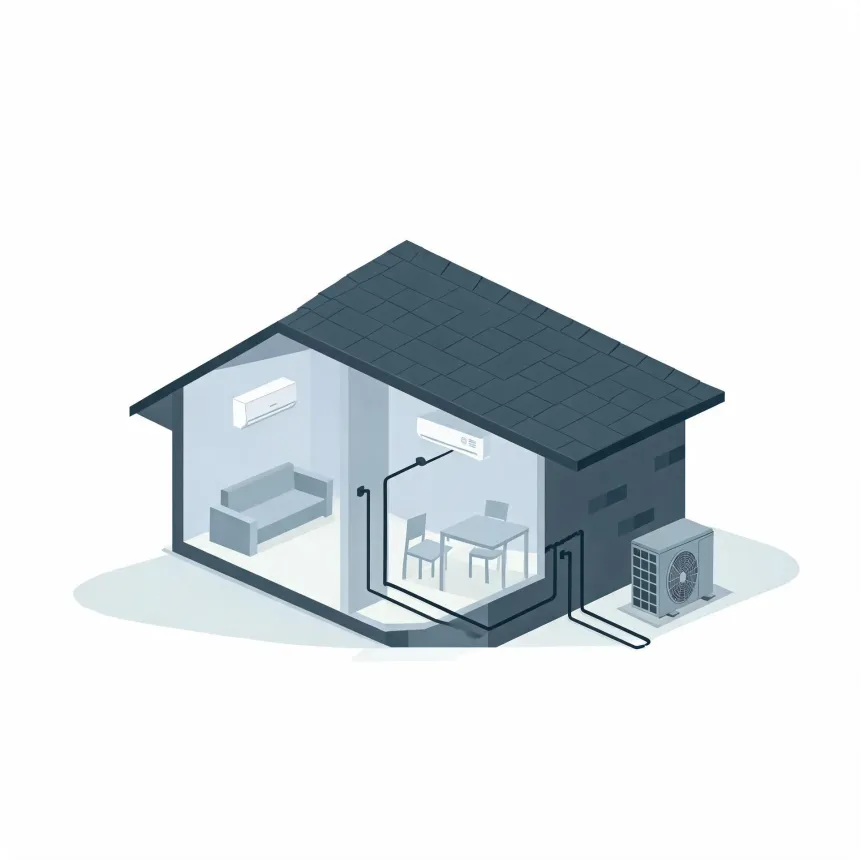
- A single outdoor unit can run anywhere from one indoor head to about eight, depending on the system. Single-zone systems heat and cool one room or open area well. Multi-zone systems split the output across several indoor heads, each with its own thermostat, so bedrooms and living spaces can run at different temperatures at once. The right number of zones depends on the layout of the house, which is something a contractor needs to walk through in person.
- Can a mini split heat a whole house?
- It can, if it's sized and placed for that job from the start. A multi-zone mini split with heads in the main living areas and bedrooms can carry the full heating load of a house, including through winters here where nights average 20°F from December through February. What it takes is a contractor calculating the heat loss of the house and placing enough capacity where it's needed, not just adding a unit or two to an existing oil or electric system. A contractor can work out what that looks like for a specific house.