






Birds nesting in a dryer vent in Hartford, CT

A white square plastic dryer vent hood with a hinged flap propped open, revealing a round duct opening, shown against a plain light gray background.
Answer a few questions

A bird in your dryer vent usually means a nest, and it happens most in spring when birds around Hartford look for a warm, sheltered spot to build one. The vent hood flap is supposed to stay closed except when the dryer is running, but a weak or broken flap spring lets it hang open, and that gap is an easy way in. Once nesting material packs the duct, your dryer has nowhere to push the hot, damp air it produces, so it runs hotter and takes longer to dry a load. That buildup is also a fire hazard, since lint collecting against nesting material right at the exhaust point can ignite. If you've noticed the vent flap stuck open, chirping near the vent, or clothes taking much longer to dry, there's likely a blockage that needs to come out before you run the dryer again.

Why does a blocked vent cost you more in a house like yours?

  • 2.41 people per household on average

    Your household is typical for this area at 2.41 people, which means a dryer that runs most days. A blocked vent turns every one of those loads into a longer, hotter cycle.

  • Half the homes here were built by 1966

    Half the homes around Hartford went up by 1966, so a lot of vent runs are older metal duct that's had decades to dent or sag, giving a nest more ledges to catch on.

  • Power here costs 29.13 cents per kilowatt-hour

    Power here runs 29.13 cents per kilowatt-hour, well above most of the country. A dryer fighting a blocked vent pulls more of that expensive power every single load.

ACS 2020-2024 · EIA-861 2025

A woman in a cream sweater with her hair in a bun laughs while seated at a stone counter holding a glass of red wine, in a dimly lit interior with a sofa, houseplants and a large window at night.
A woman with long dark hair in a cream knit sweater laughs while looking off to the side, seated in front of a dimly lit kitchen with an island, stools, open shelving and a potted plant, with a glass of red wine in the foreground.
A smiling woman with long dark wavy hair in a light knit sweater sits at a marble counter with a glass of red wine, with a dimly lit living room and kitchen in the background.
A smiling woman with long wavy brown hair in a beige sweater sits at a white marble counter with a glass of red wine, with a living room, dining table and kitchen cabinets behind her.

Clear It Yourself or Call for Help

Clear the nest yourself

  • A nest built from twigs and dryer lint is dense enough to block most of the airflow even if you can see light through the hood.
  • Reaching in from outside only clears what your hand can touch, and most nests sit further up the duct than that.
  • If the bird is still active, disturbing the nest can send it further into the vent instead of out of it.
  • Running the dryer to try to force the nest out pushes hot, moist air into a blocked duct, which is a fire risk.
  • You won't know if the vent run is crushed, sagging, or disconnected behind the wall until someone opens it up or runs a camera through it.

Have it cleaned

  • A contractor who works dryer vents in the Hartford area all season knows nests show up most in spring and checks the full run, not just the hood.
  • Clearing the duct end to end gets twigs, lint, and droppings out of sections you can't reach from either end.
  • A damaged or missing flap gets flagged and can be replaced so another bird doesn't get in once this one's gone.
  • One contractor means one visit and one explanation, not sorting through separate quotes and repeating the problem to each one.
  • Dryer vent work is routine for someone who does it regularly, so the nest gets handled without guesswork about what's safe to disturb.
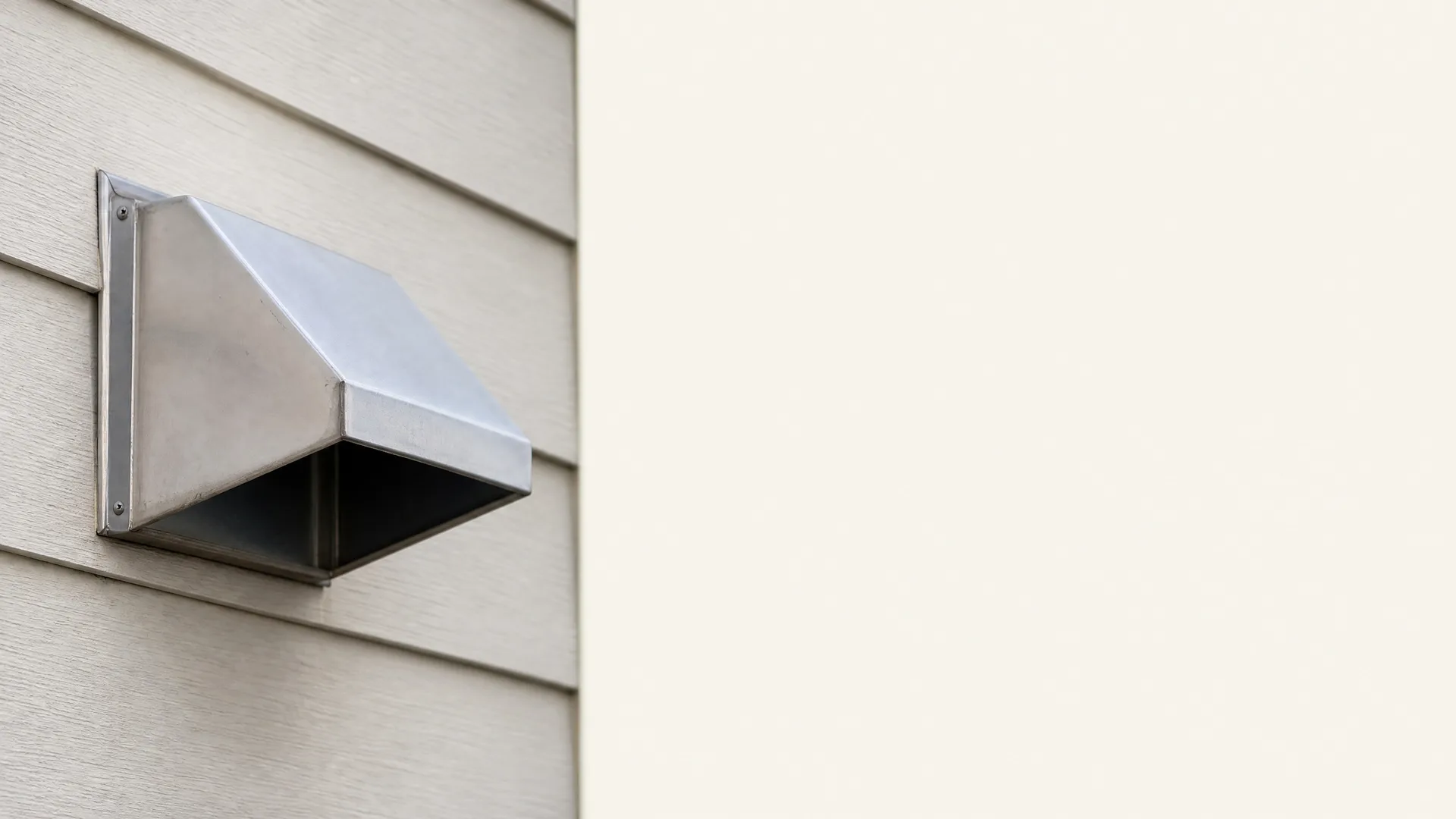
A metal hooded dryer or exhaust vent mounted with screws on gray horizontal lap siding, beside a plain off-white wall surface.

Why the flap matters so much

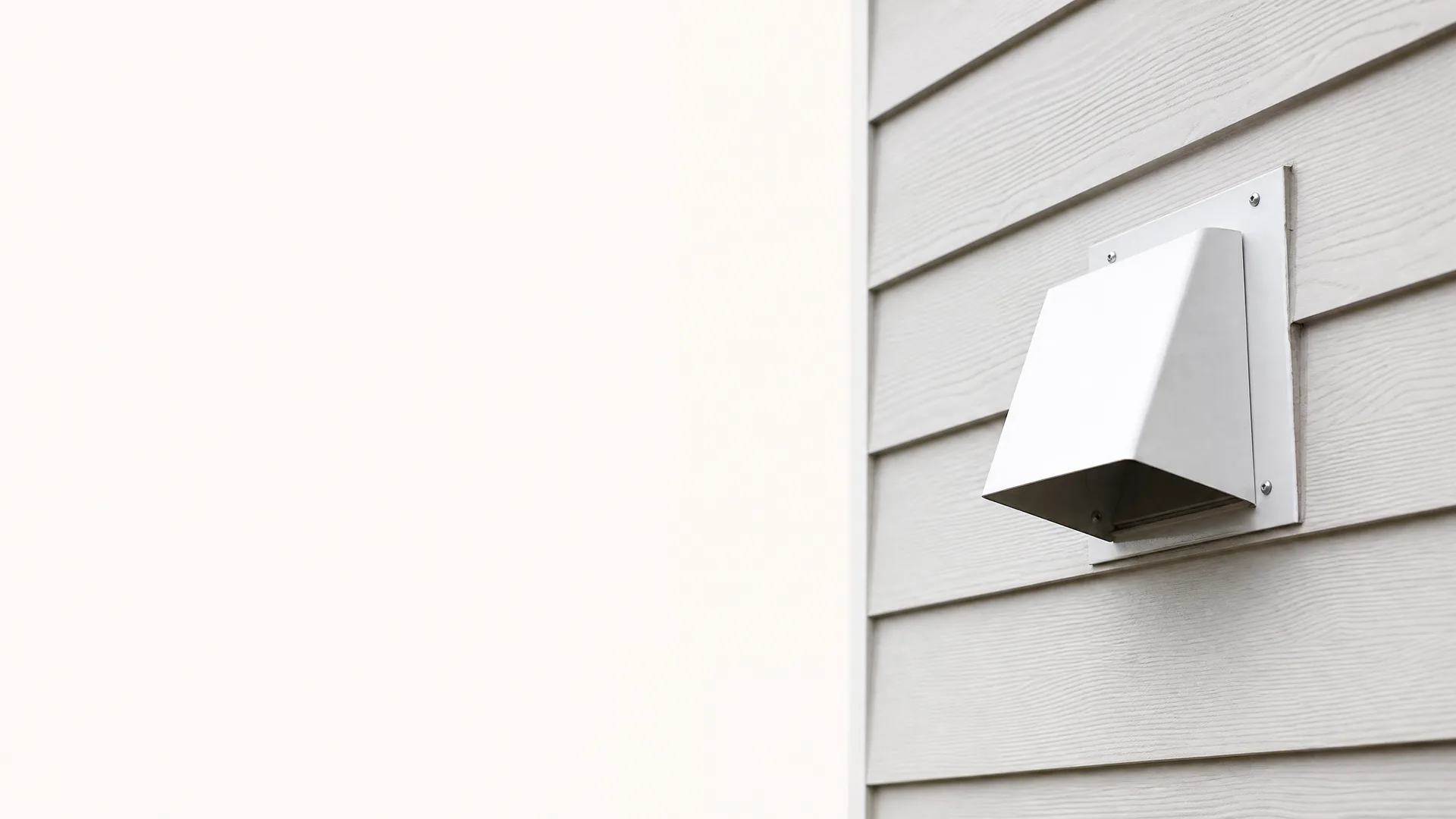
The flap on your vent hood is the only thing standing between your duct and the outside. It is spring loaded, and it is supposed to lift only when air is pushing through it from the dryer. Once a hinge rusts or the spring weakens, the flap sags open or won't seat shut, and that gap is an invitation. A bird looking for cover sees a dark, draft-free space protected from rain, and starts carrying material in.

A white metal hooded exterior vent screwed to a square backing plate on light gray horizontal lap siding, with a blank off-white wall filling the left half of the frame.

What a nest does to the duct

Twigs, grass and lint packed into a duct don't just slow the air, they trap heat and moisture against a surface already coated in lint. That combination is what dryer duct fires start with. A vent that can't push air out also pushes it back toward the dryer drum, which is why some homes notice the laundry room getting warmer than usual during a cycle, or the dryer shutting off before clothes are actually dry.

How do birds even get into the vent in the first place?

How do birds even get into the vent in the first place?

Through the hood, when the flap won't stay shut

The only opening to your dryer vent is the hood on the outside wall, and it's covered by a flap that's supposed to sit closed against the duct except when the dryer is running. Birds don't peck through metal or siding to get in. They land on that hood, find the flap hanging loose or propped open, and walk right through it. Once a bird gets in a few inches, lint and warmth make it a good place to build, and a nest can go up in a day or two. Smaller birds especially can squeeze through a gap that looks too narrow to matter, which is why a flap that doesn't close all the way is the whole problem.

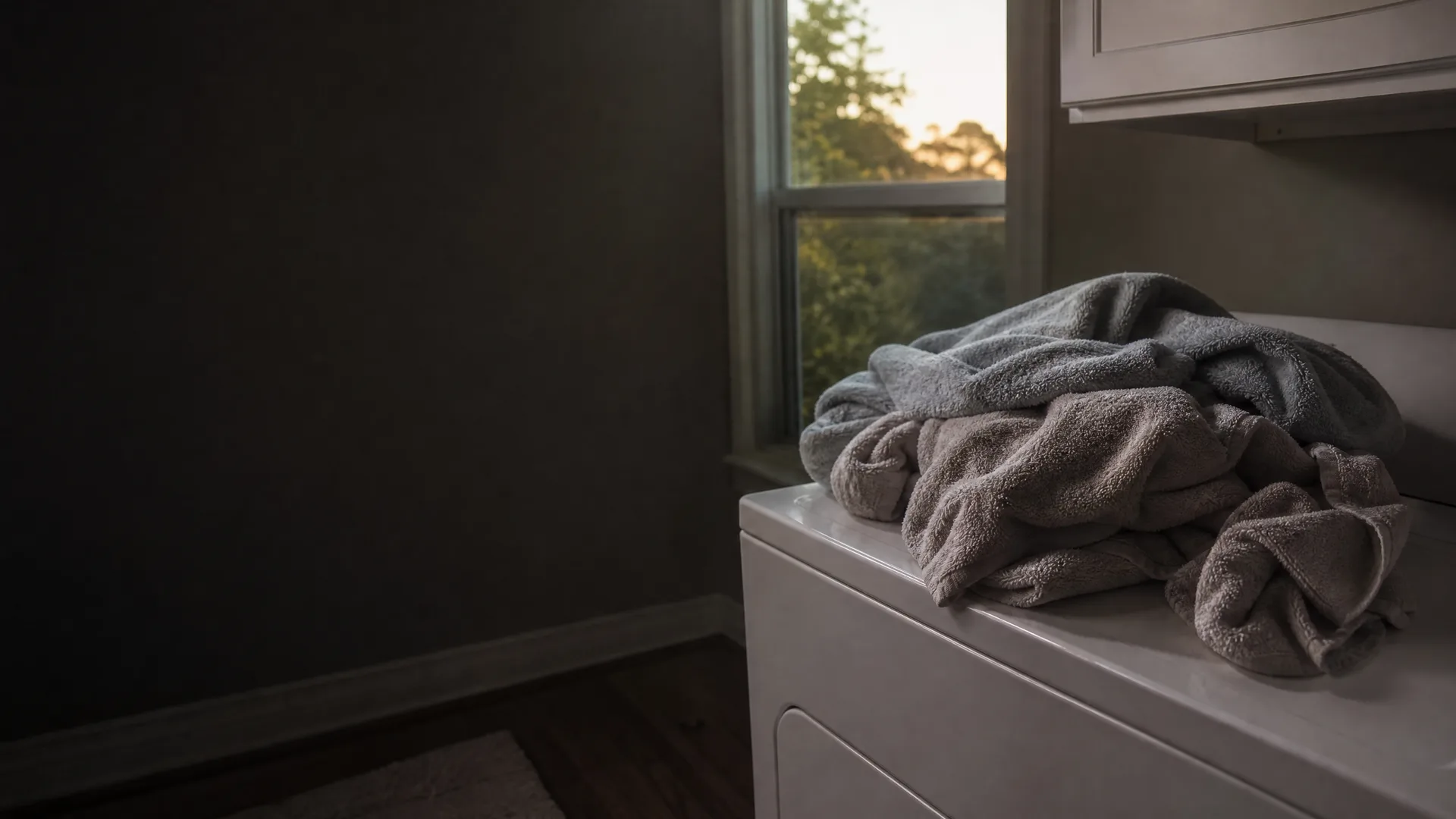
A pile of gray and taupe towels sits on top of a white laundry appliance in a dim room beside a window with trees and sunlight outside.

You pull the last towels out around eight and they're still damp, warm but damp, the way they get when the dryer's run long past when it should've shut off. You run a hand along the top of the machine and feel it, almost hot. The load before this one felt the same, and you figured it was just a big load. Now there's a heap of towels sitting on top of the dryer because you don't want to put them away wet, and you're standing in the laundry room at the end of a long day trying to decide if you run them through again or hang them somewhere to finish drying overnight.

No calling every shop in Connecticut

The pro who gets in touch is licensed in Connecticut and works in Connecticut.

No charge to send it. You decide if you hire them.

Leave the nest where it is

A nest in your vent usually has eggs or chicks in it during the spring months when birds are building, and removing it then can run against state and federal protections on migratory birds. It also means the parent birds will likely try to rebuild in the same spot within days, so pulling the nest out yourself without addressing the flap or hood just starts the problem over. A contractor who deals with this regularly will know how to tell an active nest from an old one, and whether the work needs to wait a few weeks before the vent can be cleared for good.

Have the vent cleared and sealed

Once a nest is out and the duct is clear, the hood needs a flap that actually closes, or wildlife-rated screen behind it, so the next bird looking for shelter can't get back in. This is also the point where whoever's doing the work can run a brush or camera the full length of the duct, since lint and nesting material both tend to collect at the bends, not just near the hood. A vent that's been cleared but not sealed is usually a vent with another nest in it by the following spring.

2.41 people per household on average

At 2.41 people, your household is likely running a load most days, sometimes two. A vent choked with a nest has to clear all that moist air every time, and with nowhere to go it backs up into the duct and the room faster than it would in a house doing wash once or twice a week.

ACS 2020-2024

A white hooded exterior dryer vent with a mesh screen, screwed to light gray horizontal lap siding above a concrete foundation.

Vent working as it should

The flap sits flush against the hood and only lifts when the dryer pushes air through it. Lint and warm air pass straight outside with nothing to slow them down. A hand held near the hood during a cycle feels steady airflow, and the flap drops shut again as soon as the load ends.


A metal dryer vent hood mounted on beige horizontal lap siding, with gray lint clogging its open flap, above a lighter textured foundation wall.

Vent packed with a nest

The flap hangs open, pinned back by twigs and lint packed behind it. Air from the dryer has nowhere to go but back up the duct, so the flap can't do its job even if the spring and hinge are fine. From outside, you're looking at a blockage, not a broken part.

A smiling bearded man in a navy sweater sits at a candlelit dinner table with a glass of red wine, a bowl of salad, and plates of food in the foreground.
A woman with dark hair in a bun reclines on a sofa with her eyes closed, wrapped in a cream fleece blanket, a closed blue hardcover book resting in front of her, with a lit lamp and a vase of dried flowers in the background.

Calling around to find someone

You'd be on the phone with a handful of vent cleaning outfits, explaining the same thing each time, that there's a nest in there and the dryer's running hot, and waiting to see who actually calls back. Then comparing quotes that aren't quite for the same job, trying to guess which company actually deals with bird nests and not just lint. Some won't answer. Some will want to send someone out just to look before they'll say what it costs. It's a lot of effort for a problem that's already making your laundry take twice as long.

One call to someone local

A contractor matched to you already works on dryer vents around Hartford every spring, when nests like this one show up. They know a flap that won't seal and a duct packed with twigs when they see it, and what it takes to clear it out and get the flap working again. You explain the problem once. There's no stack of calls to sort through afterward, no competing bids to weigh against each other, just one licensed local contractor who's handled this before and knows what to check.

A beige plastic dryer vent hood mounted on horizontal vinyl siding, with clumps of gray lint protruding from the open flap.
Before you get your dryer vent cleaning
A white hooded exterior vent cover with a louvered underside, screwed to beige horizontal lap siding above a lighter stucco lower wall.
After you get your dryer vent cleaning
A metal hooded dryer vent with a louvered opening mounted on beige horizontal lap siding above a concrete foundation wall.

The hood with a clear flap

The cap sits flush against the wall, screwed down tight, flap closed. Nothing is roosting here because there's no gap for a bird to work with. Air and lint pass straight out when the dryer runs and the flap drops shut behind them.

A white hooded dryer vent mounted on horizontal lap siding, with a thick mass of gray lint clogging the opening beneath the hood.

The hood packed with lint

Here the flap can't close at all. Gray lint has built up thick enough to prop it open year round, which is exactly the kind of gap and warmth a bird looks for in spring. Once that happens, the vent stops venting and starts collecting.

A closed silver laptop and a glazed ceramic mug on a wooden table, with a blurred kitchen counter, potted plant, cutting board and window in the background.

A bird in the vent means a cleaning, not a guessing game

A dryer that's running long and coming out warm but damp has a blocked vent, and in Hartford in spring that's usually a nest. That's the answer. The flap on your hood can't do its job once a bird's gotten past it, and nothing short of clearing the duct fixes the airflow.

What you'd otherwise be stuck with is finding someone who'll actually do that work right, not just reach in from the hood. That means calling a few vent cleaning companies, explaining the nest and the hot dryer to each one, and waiting on quotes to see who gets back to you first. A contractor local to the Hartford area who cleans vents every spring knows what a nest like this usually involves before they even get there. You explain it once, to one company, and you know where things stand.

Interior corner of a dining room with a round wooden table, a ceramic vase holding olive branches, a dark spindle-back chair near a curtained window, and a sideboard with a lamp against beige walls.
A galvanized metal hooded dryer vent screwed to gray lap siding on an exterior wall.

Explain it one time

Duct and vent cleaningCapitol Planning Region, CT
Step 1 of 3

What kind of equipment?







